
It is hard to comprehend that more than five million children have been forced to leave their homes and begin a new life far from their familiar surroundings, their friends, and the streets they once knew. They have witnessed hostilities, endured occupation and bombardment, lost loved ones, and seen things that no child should ever have to see.
Children of war. They are remarkably resilient and strong, yet many have sustained psychological trauma from what they have experienced — trauma that can have serious long-term consequences if not addressed in time. It was precisely for this reason that the “SviTY” program was created: to help young people overcome the trauma of war and adapt to new realities of life. The program is designed for adolescents aged 11–17 who were forced to leave their homes, as well as for children from military families.
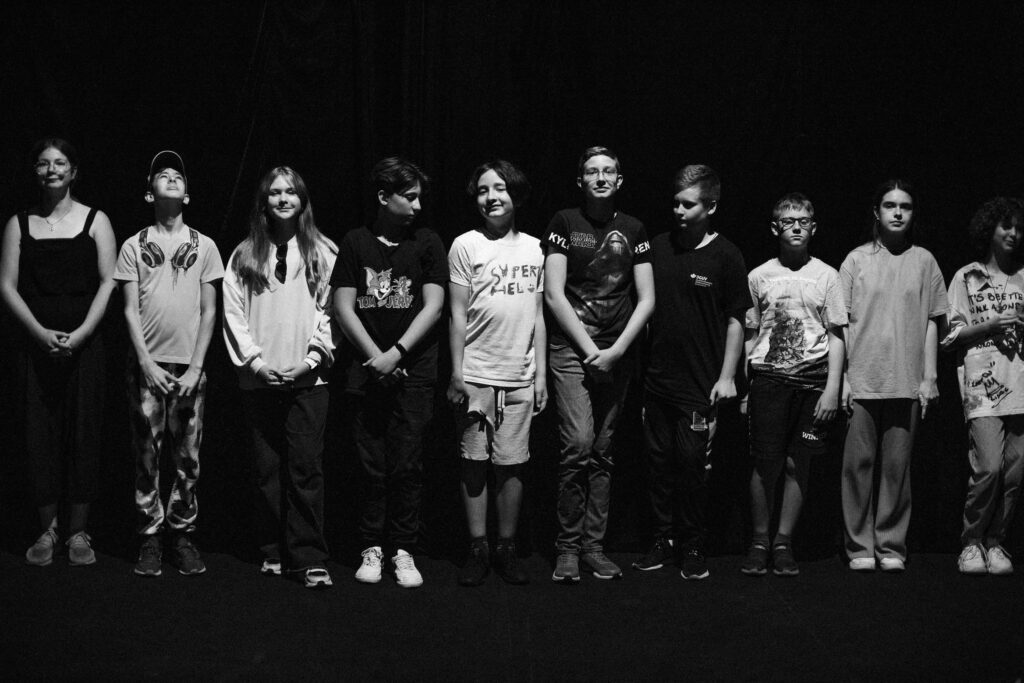
Everyday life in the “SviTY” space
Each day, the “SviTY” space is filled with children’s laughter, heartfelt conversations, and cookie crumbs left behind during tea breaks. But it was not always this way. These are teenagers who have been attending the program for many months now. They have found new friends and gradually brought color back into their lives. It is hard to believe that these are the same children who once came to the space for the very first time. Their eyes were filled with sadness, fear, and despair, yet each of them understood that they needed support and connection with peers.
The program schedule is designed as a comprehensive system and includes group and individual sessions with psychotherapists, English classes, acting workshops, art therapy, financial literacy, public speaking, career guidance activities, excursions, and other formats. All components of the program are aimed at stabilizing adolescents’ emotional well-being, supporting their gradual openness, developing social and life skills, and helping them recognize their interests and potential professional paths.
A story no child should have to live through
The space is attended by children from different cities, including Kharkiv, Mariupol, Berdiansk, Kramatorsk, Lysychansk, Kherson, and many others. Behind their laughter are unusually mature gazes, and deep in their memories lie painful experiences — each child carries a story that is difficult to hear.
Nina, her husband, and their son Antyp lived an ordinary life, like most Ukrainians before February 24, 2022. They experienced the beginning of the full-scale invasion at home in Mariupol. After the first explosions, they went to a bomb shelter hoping to wait it out for a few days, taking with them only two backpacks. They never returned home, as it was simply too dangerous. The shelter turned out to be a basement with no electricity or heating, around 100 unfamiliar people nearby, and no possibility of going outside due to constant and intense shelling.
After some time, the family decided to move to another shelter—the Mariupol Chamber Philharmonic, choosing between it and the Drama Theatre (*a few days later, russian forces dropped a bomb on the Drama Theatre). In the new shelter, more than a thousand people had gathered. They supported one another in every possible way: cooking together over open fires, sharing water, and treating the wounded. Entire families, children, elderly people living alone, newborn babies, and pets — all in one place.
A journey that lasted a month
On March 17, the family decided to leave the city. The journey was long and extremely difficult, but fortunately they managed to avoid danger, including passing through all checkpoints and avoiding filtration for Antyp’s father. It took a month for Antyp and his parents to reach Lviv. At first, it felt strange to live a relatively normal life after the months they had endured. Adapting to new conditions was difficult, as the family had abruptly left their home and everything familiar behind. They had to adjust to an entirely new environment: a new city, a new school for their child, new classmates.
Such circumstances affect everyone, especially adolescents, who are already capable of deeply understanding what is happening. Antyp understood that this was real war, filled with cruelty—buildings destroyed, wounded people all around, and lives being lost. Only over time was he able to share his experiences and speak about his fears, including the fear of losing his parents.
While in the shelter in Mariupol, Antyp asked his parents to go for water and food one at a time, so that he would not be left an orphan.
The “SviTY” program and Antyp’s recovery
After arriving in Lviv, Antyp’s mother found the page of the safe space “SviTY” and enrolled her son in the program. There, he entered an environment with other children, most of whom had also lived through difficult experiences and were forced to leave their homes. Gradually, Antyp began to open up and even smile again. Over time, he made new friends.
“SviTY” is also a place where teenagers can find friends among peers in an environment built on respect and mutual support.
According to the family, the “SviTY” psychosocial recovery program had a significant impact on Antyp’s adaptation, as schools usually do not focus on psychological rehabilitation and lack the capacity to provide sufficient individual attention to each child. Antyp attends the sessions with enthusiasm, and his improved mood is clearly noticeable — something especially important given the traumatic events he experienced in such a short period of time, the loss of his familiar life, and the need to start over.
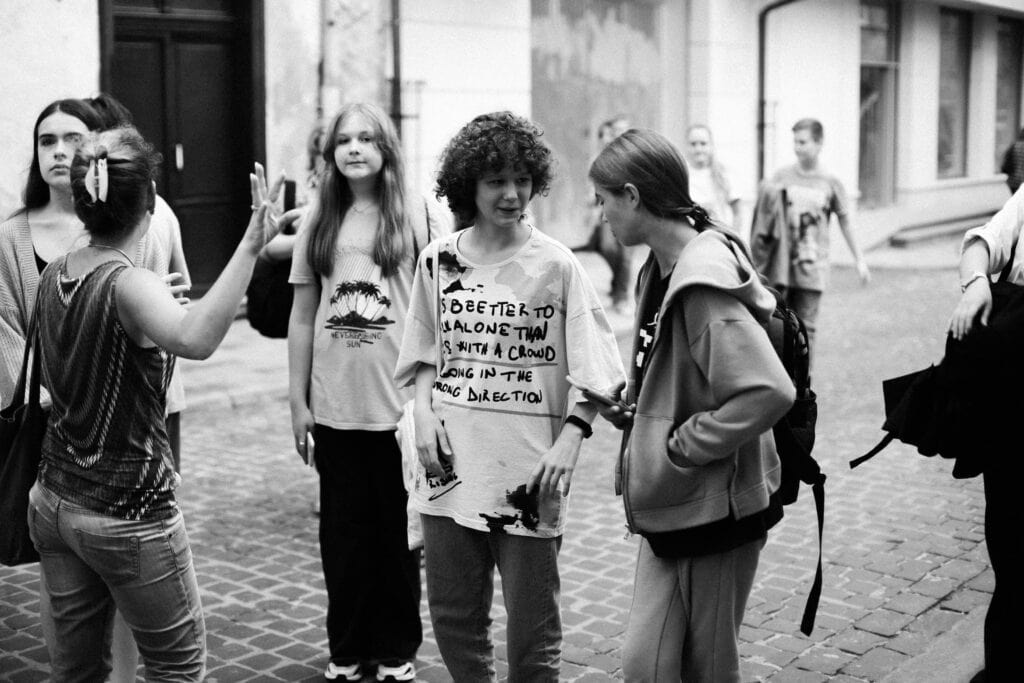
There are countless such stories. Children have witnessed the horrors of war firsthand: coming under fire during evacuation, spending weeks in basements, months under occupation, living with constant explosions, losing loved ones, and being forced to begin a new life. As a result, almost every child struggles with adaptation, lacks peer communication, and experiences emotional distress. This is not how childhood should be for Ukrainian children.
A new generation is growing up in Ukraine, and it is this generation that will lead us toward a better future.
